2025 Months, November 2025

🕯️ The Beaver Moon Writing Challenge: “Build Your Creative Sanctuary”

Goal: Write something that reflects the themes of preparation, protection, and perseverance. This could be a scene, poem, or reflection that mirrors your current creative season.

Pick one of these moon-infused prompts:

🌕 1. “The Shelter of Stories”

Write about a character who builds something safe—a home, a promise, or a memory—to protect what they love before winter comes.
🪶 Challenge: Use sensory details that evoke warmth and comfort.

🌕 2. “Frozen in Time”

As the frost settles, something (or someone) must be preserved until spring.
🔥 Challenge: Write a 300–600 word flash fiction about a moment suspended in ice—literal or emotional.

🌕 3. “The Quiet Before the Cold”

Your protagonist senses change approaching. Capture their internal stillness before transformation.
🌙 Challenge: End your scene with a symbol of light—a candle, a reflection, or the moon itself.


🌔 Moon Journaling Prompts for the Beaver Moon

Use these journaling prompts to tune into your inner world under November’s moonlight. Reflect, release, and record what this season is teaching you.

✍️ Creative Reflection

  • What projects, ideas, or dreams are asking to be “finished” before the year ends?
  • Where do I need to create structure or boundaries to protect my creativity?
  • How can I nurture my imagination during slower or quieter months?

🌙 Emotional Grounding

  • What emotional warmth am I carrying into winter?
  • What do I need to let go of before the next creative cycle begins?
  • How can I make my writing practice feel more like a sanctuary?

🌕 Mini Ritual for the Beaver Moon

You can do this before journaling or after writing:

  1. Light a candle or turn on a soft lamp.
  2. Write one intention for what you’ll build or finish before year’s end.
  3. Speak it aloud, then place your hand over your heart.
  4. Whisper: “I build my light through words.”

Take a moment to sit in gratitude for your creativity—your quiet fire through the cold.


🐾 Bonus Creative Prompt: “Moonlit Reflections”

Write a short piece (poem, drabble, or journal entry) beginning with:

“The moon watched as I built my refuge…”

Let it unfold naturally. Let the words be your shelter tonight.


🌕 Closing Thoughts

The Beaver Moon reminds us that slowing down doesn’t mean stopping—it means preparing the ground for what’s next.
Honor your creative hibernation. Build your refuge of words. Let your writing become the warmth that carries you through the darker months.

💌 Share your reflections or stories:
Tag your posts with #BeaverMoonChallenge or #SarasWritingSanctuary so others can join you under this moon’s glow.

Happy Writing ^_^
2025 Months, November 2025

✨ Explore the Realms of Imagination — My New Writing Prompt Collections Are Live on Payhip!

If you’ve ever stared at a blank page and wished for a spark — something dark, romantic, or mythic to ignite your creativity — you’ll love what’s waiting for you in my new Payhip shop!

Each collection is crafted to help writers, worldbuilders, and dreamers like you dive straight into storytelling magic. Whether you’re writing a fantasy epic, a gothic romance, or a cozy urban tale, you’ll find prompts designed to fuel new ideas and break creative blocks.


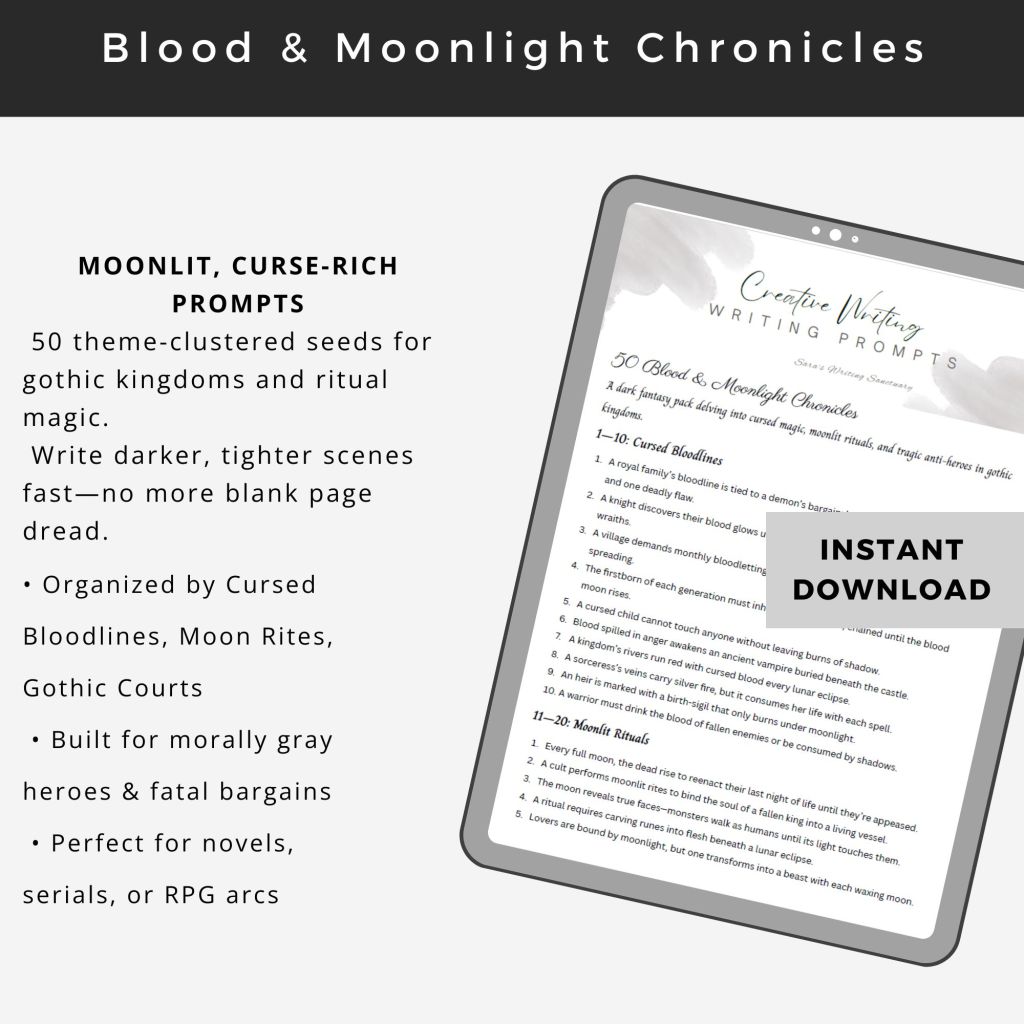
🩸 Blood & Moonlight Chronicles

Moonlit, curse-rich prompts for gothic kingdoms and ritual magic.
Perfect for morally gray heroes, fatal bargains, and stories woven in shadow.
Organized by Cursed Bloodlines, Moon Rites, and Gothic Courts.

Ideal for: Dark fantasy writers, serial creators, or RPG storytellers.


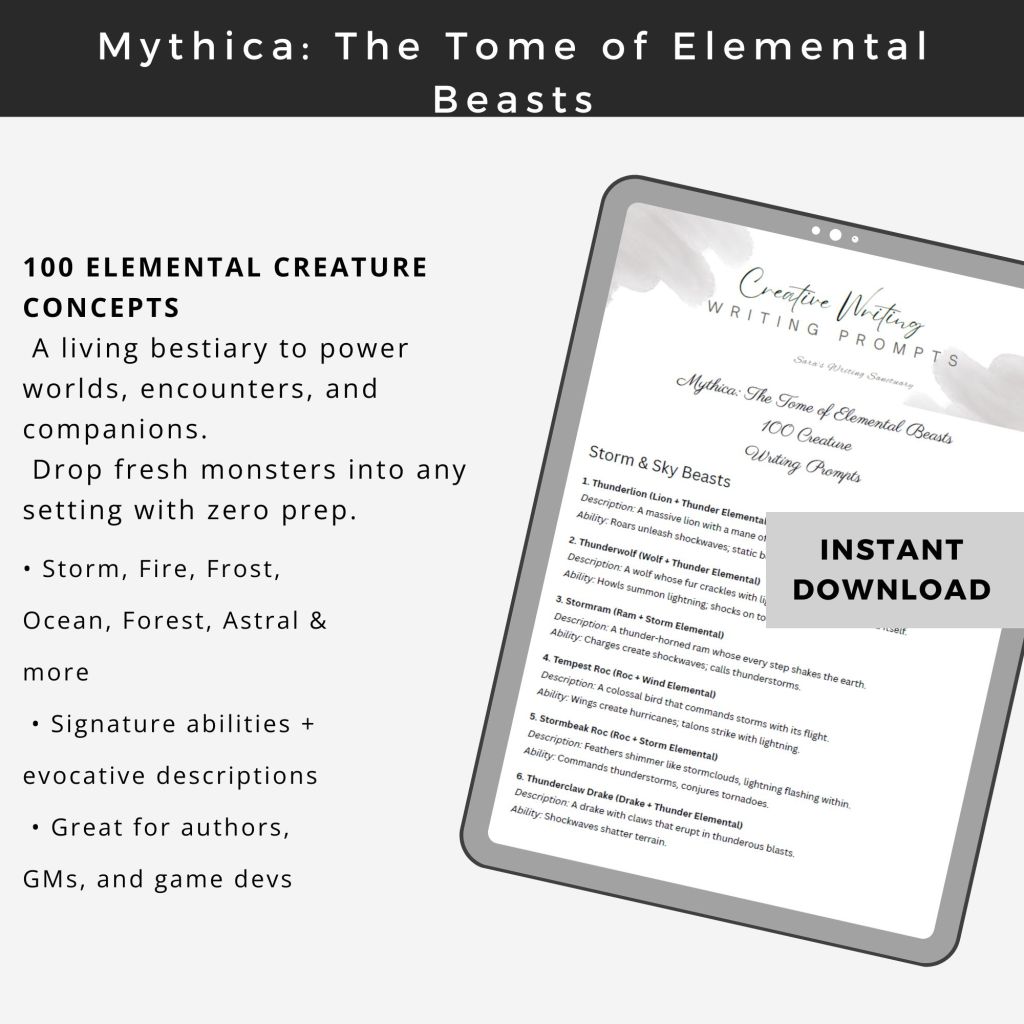
🌩️ Mythica: The Tome of Elemental Beasts

100 elemental creature concepts for worldbuilding and encounters.
From storm lions to forest spirits, drop fresh monsters into any setting — no prep needed.
Includes signature abilities and evocative descriptions.

Ideal for: Authors, GMs, and fantasy game developers.


🎭 Midnight Masquerade (Spicy Romantasy)

Ballroom danger meets delicious tension!
50 high-tension prompts for masked courts, vampire salons, and dangerous desire.
Includes tropes like enemies-to-lovers, blood oaths, and slow-burn to scorching scenes.

Ideal for: Duet series, episodic stories, and romantasy lovers.


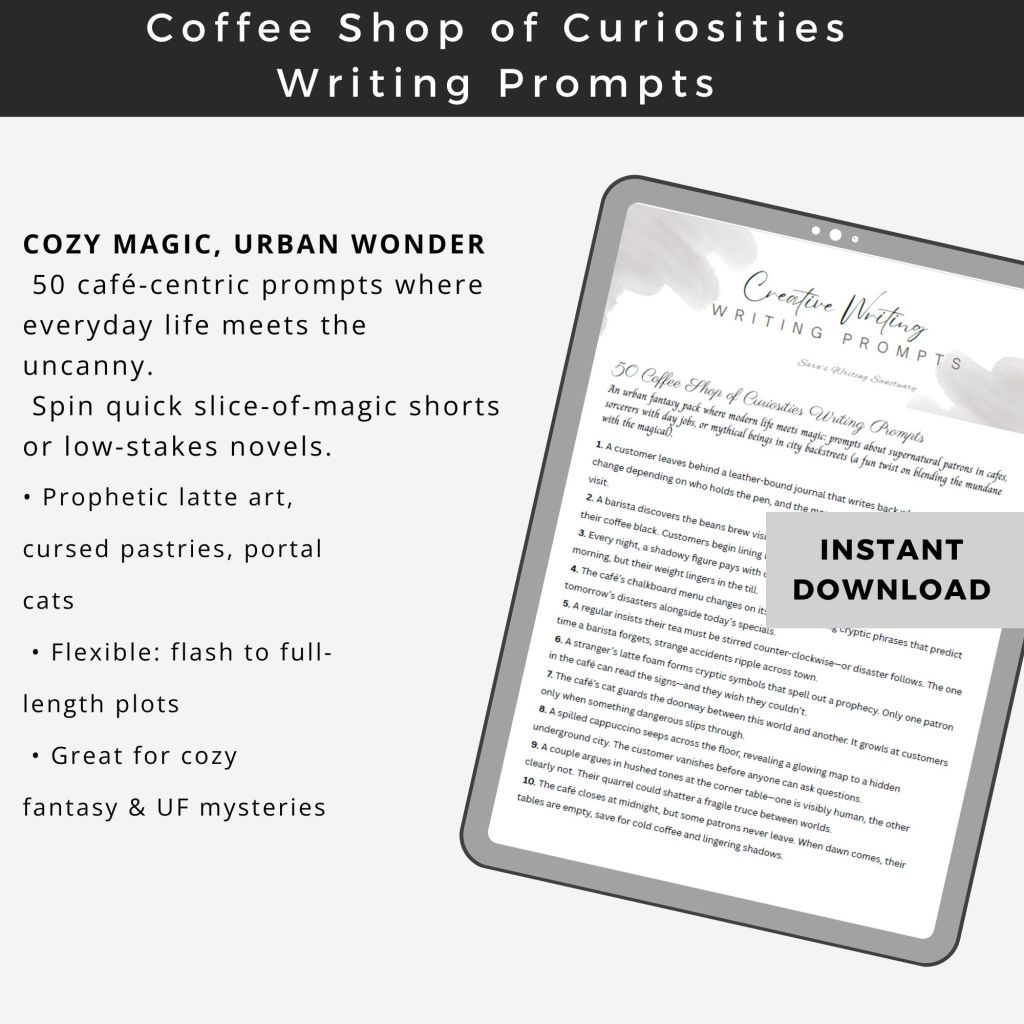
Coffee Shop of Curiosities

Cozy magic with urban wonder.
50 café-centric prompts where everyday life meets the uncanny.
Prophetic latte art, cursed pastries, and portal cats await.

Ideal for: Cozy fantasy and urban fantasy mystery writers.


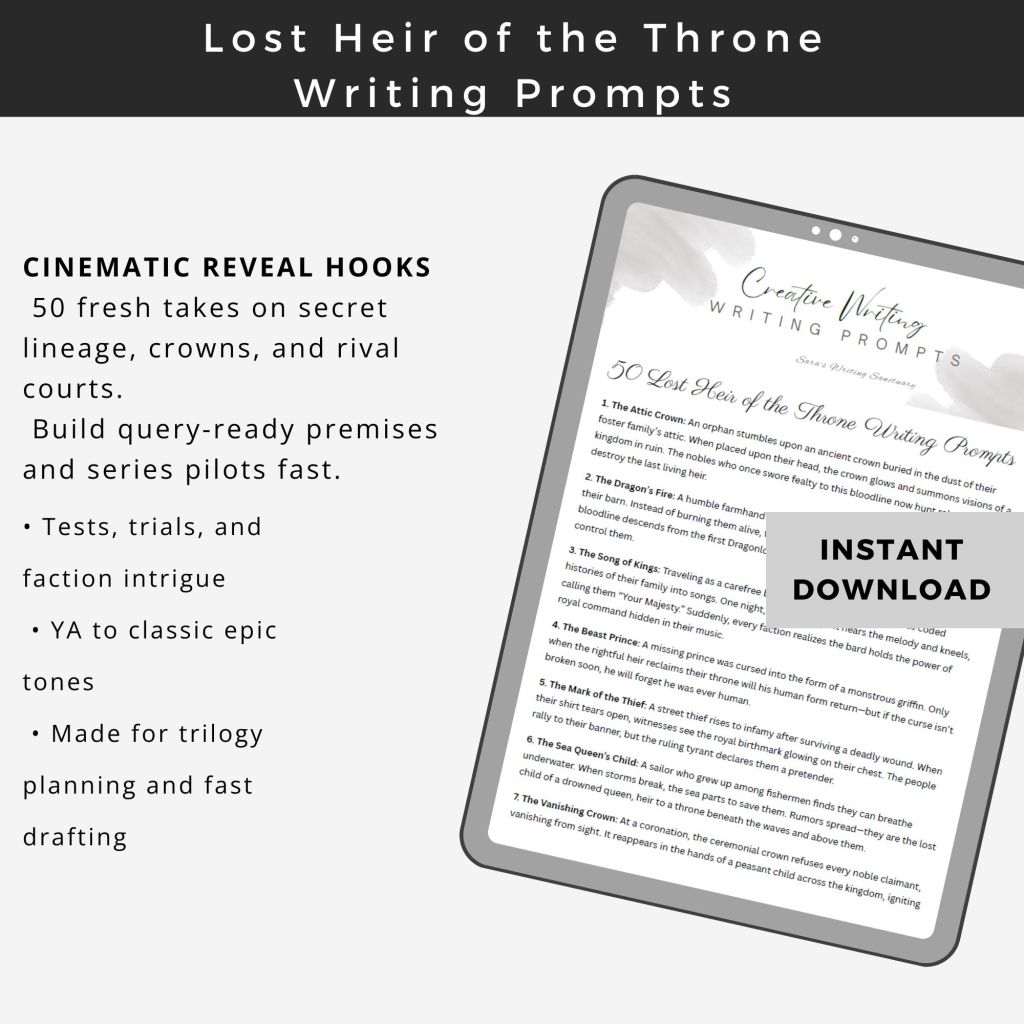
👑 Lost Heir of the Throne

Cinematic, reveal-driven prompts for lineage, crowns, and rival courts.
Tests, trials, and YA-to-epic intrigue for series or trilogy planning.

Ideal for: Writers building royal sagas or fast-drafting epics.


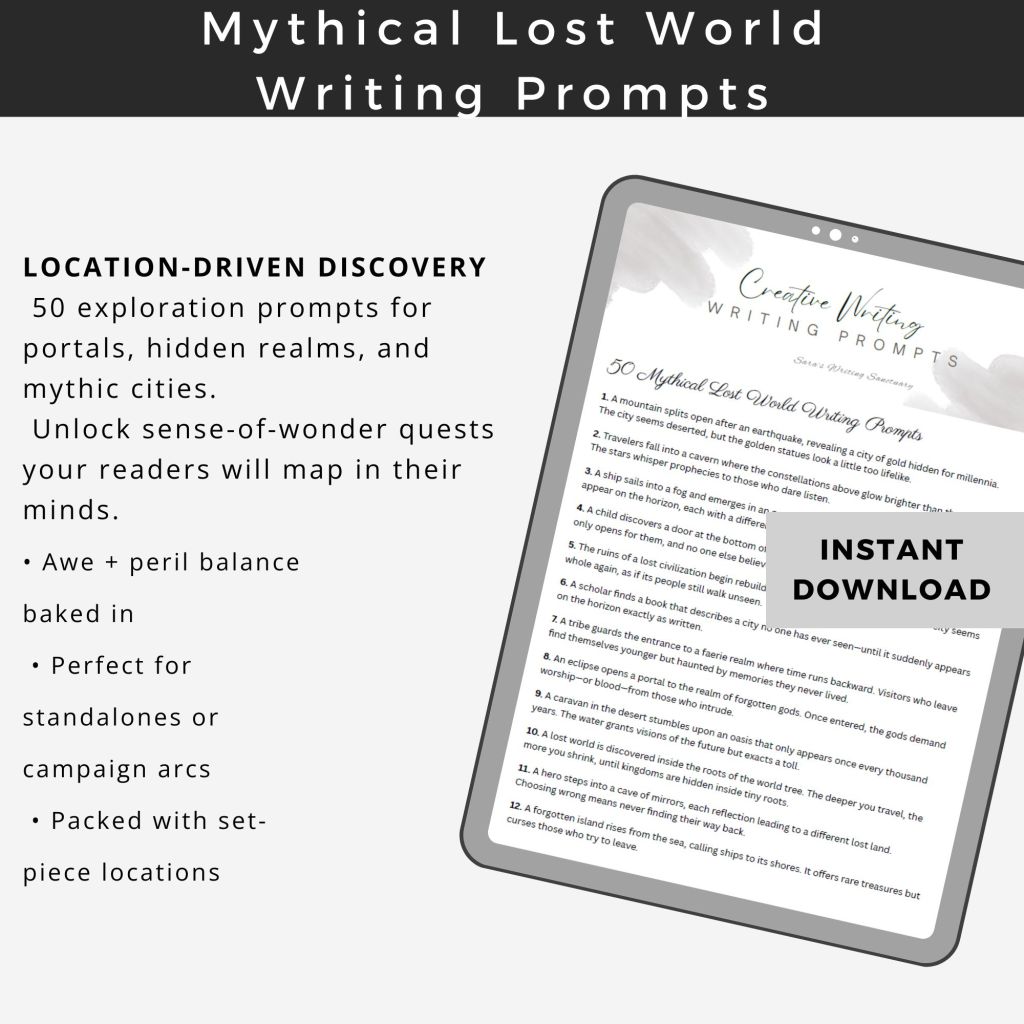
🌍 Mythical Lost World

Location-driven discovery prompts for portals, hidden realms, and mythic ruins.
Awe + peril baked in — perfect for standalone adventures or campaign arcs.

Ideal for: Fantasy explorers and quest-based writers.


⚔️ Epic Fantasy Plot Ideas (with Twists)

50 big-scope plots with built-in surprise turns.
Each prompt includes a “Plot” and “Twist” — plug-and-play for your next novel outline.

Ideal for: Writers planning trilogies, beat sheets, or story pitches.


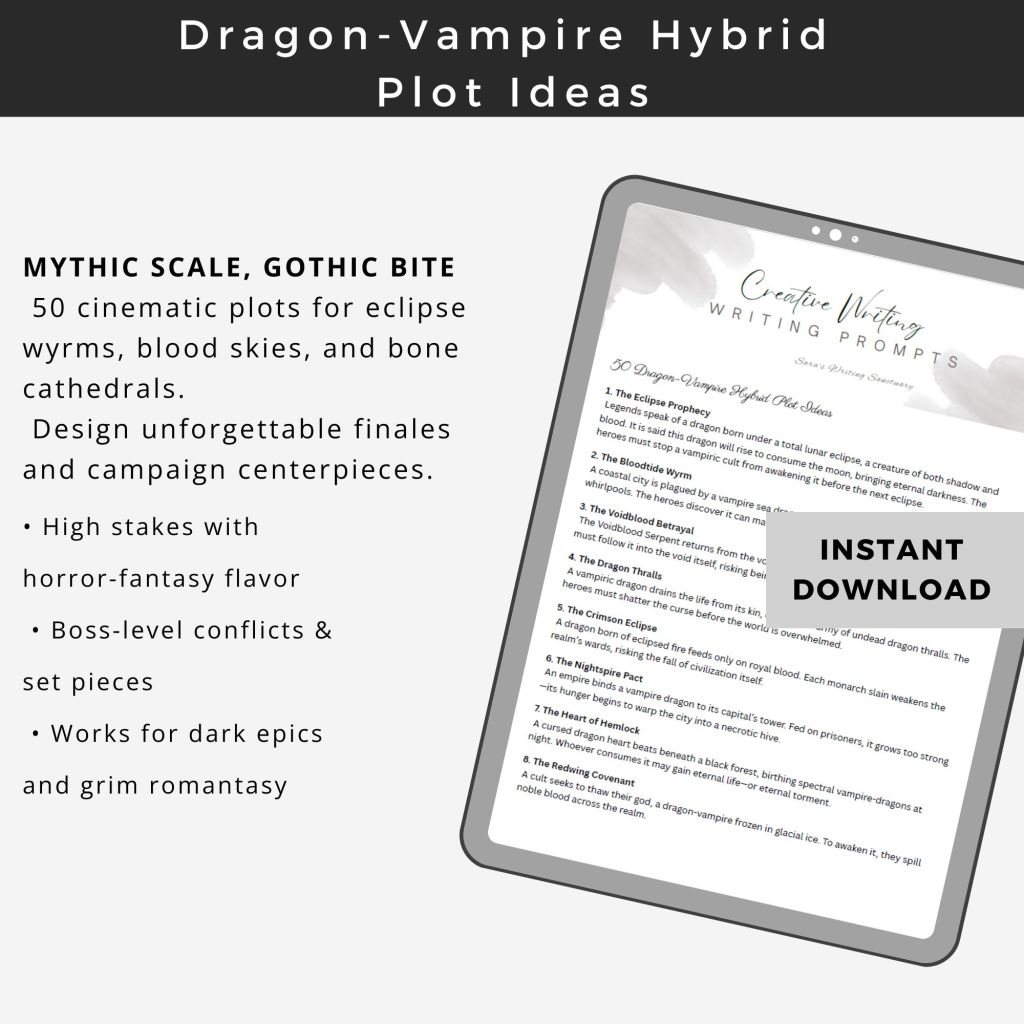
🐉 Dragon-Vampire Hybrid Plot Ideas

Mythic scale meets gothic bite.
50 cinematic plots for eclipse wyrms, blood skies, and bone cathedrals.
Expect boss-level conflicts, horror-fantasy tones, and unforgettable finales.

Ideal for: Dark fantasy and grim romantasy creators.


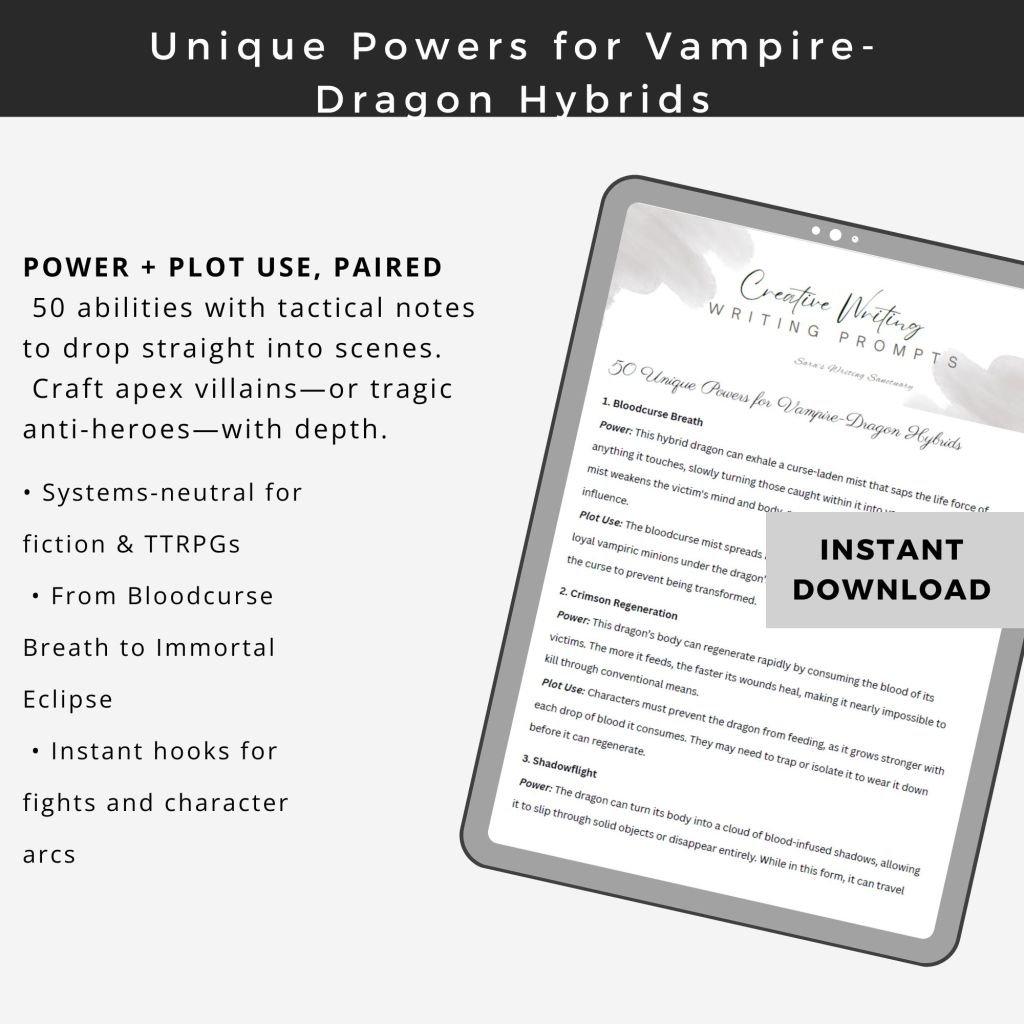
🔥 Unique Powers for Vampire-Dragon Hybrids

50 hybrid abilities with tactical notes for scenes, fights, and arcs.
From Bloodcurse Breath to Immortal Eclipse, perfect for fiction or TTRPGs.

Ideal for: Writers crafting anti-heroes, villains, or cursed legends.


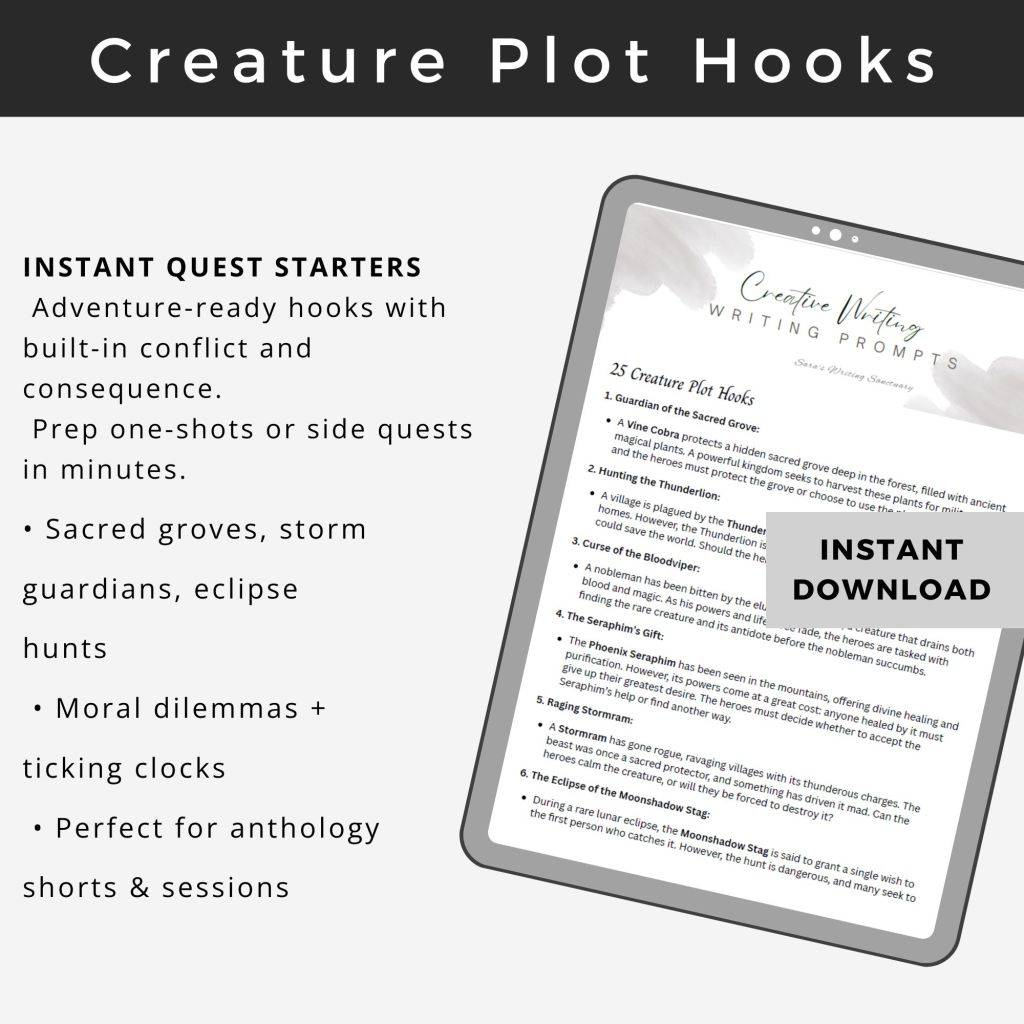
🦋 Creature Plot Hooks

Adventure-ready quest starters packed with built-in tension and wonder.
Sacred groves, eclipse hunts, moral dilemmas — ready to drop into any story.

Ideal for: Anthology shorts, campaign one-shots, and fantasy storytellers.


💫 Ready to Explore?

All collections are instant downloads, beautifully formatted for easy use on any device.
You can browse them all now in my shop:

👉 Visit My Payhip Store — Sara’s Writing Sanctuary

Whether you’re crafting a gothic saga, plotting your next fantasy series, or just want to write for fun, these packs will help you build worlds, ignite ideas, and fall in love with writing again.

50 Halloween Writing Prompts is only available through link

What’s Coming Next
I’ll be adding even more collections for the holidays and the new year — so keep an eye out for fresh inspiration! I’m also creating a dedicated page where you can easily find all the links to my writing packs anytime, along with a new Contact Page so you can reach out directly.

Your thoughts and comments are always welcome — I love hearing from fellow writers and creators. 💬

2025 Months, November 2025

🔥 Elemental Writing Prompts: Fire, Water, Air, Earth, Spirit

Every story is born from an element. Some burn bright with passion, others flow like rivers of emotion. Some drift through airy thoughts and dreams, while others are rooted deep in the soil of memory and truth. And then there are those guided by Spirit — unseen forces that move us beyond reason, whispering magic into every word.

Let’s explore each of the five elements through creative writing prompts that awaken your imagination and invite your muse to play.


🔥 Fire — Passion, Transformation, and Rebirth

Fire is the spark that ignites creation. It’s raw emotion, destruction, renewal — the will to change. Writing with fire means exploring desire, rebellion, and the courage to burn away what no longer serves.

Fire Prompts:

  1. A phoenix rises not from ashes, but from regret. What did it burn away to be reborn?
  2. Two souls bound by flame can never touch — or the world will burn. Write their story.
  3. A kingdom uses fire as a test of truth. Only those who survive the trial may rule.
  4. The last ember of a dying star falls to earth and chooses its bearer.
  5. Anger becomes magic when spoken aloud — but what happens when someone loses control?

💧 Water — Emotion, Healing, and Flow

Water carries memory, emotion, and intuition. It moves gently or storms violently — a mirror of the soul. Writing through water invites reflection and empathy, helping you dive deep into what lies beneath.

Water Prompts:

  1. A seaside village sacrifices one dream each year to calm the ocean’s heart.
  2. A mermaid loses her voice — not for love, but for vengeance.
  3. Tears of joy summon rain; tears of sorrow summon the flood. Which will your character bring?
  4. The river remembers everything that has ever fallen into it — even souls.
  5. Write a story where healing is possible only through surrendering to emotion.

🌬 Air — Change, Thought, and Freedom

Air is movement — breath, words, imagination. It’s the restless whisper of ideas that drift between worlds. Writing with air means exploring creativity, freedom, and the unseen connections that bind us.

Air Prompts:

  1. A storm carries forgotten voices across the sky. One lands inside your protagonist’s mind.
  2. A scholar learns to control the wind through poetry — each stanza shapes the weather.
  3. A messenger made of air travels between dimensions, delivering secrets of the past.
  4. The wind refuses to obey the gods. What does it want?
  5. A floating city built on clouds begins to crumble when its people forget to dream.

🌿 Earth — Growth, Strength, and Memory

Earth grounds us. It’s stability, cycles, and endurance — the pulse beneath our feet. Writing with earth reminds us of legacy, roots, and the slow, powerful act of becoming.

Earth Prompts:

  1. The forest remembers every footstep — and judges those who take without giving back.
  2. A stone golem dreams of returning to dust.
  3. Each spring, the soil chooses one mortal to bloom anew. This year, it chooses a ghost.
  4. Deep beneath the mountain lies the heart of the world — and it’s beginning to wake.
  5. Write about a garden that grows what you feel, not what you plant.

✨ Spirit — Intuition, Mystery, and Connection

Spirit is the unseen thread weaving all elements together. It’s intuition, magic, soul — the essence that transforms a story from ink to energy. Writing with Spirit means surrendering to wonder and trusting where inspiration leads.

Spirit Prompts:

  1. Two souls share one heartbeat across lifetimes — and it’s starting to fade.
  2. A dying deity whispers its power into a writer’s pen.
  3. Every dream is a doorway. One night, the dreamer forgets to return.
  4. A forgotten god awakens in the body of a modern artist.
  5. Spirit itself speaks — through you. What message does it leave behind?

🌙 Bringing the Elements Together

Each element can stand alone or combine to create balance. Try weaving multiple elements into a single story — a Fire-born hero seeking redemption in the Waters of memory, or an Air spirit trapped within Earth’s roots. Let their oppositions shape conflict, and their harmony shape resolution.

When you write with the elements, you’re not just creating worlds — you’re invoking energy. You’re writing with the same forces that shape life itself.


✨ Try This Challenge:
Pick one prompt from each element this week. Write five short pieces — one for each — and notice how your voice changes with each energy. Fire may push you into bold language; Water may soften your tone; Earth may anchor your pace; Air may lift your ideas; Spirit may reveal something unexpected.

Happy Writing ^_^

2025 Months, November 2025

Organizing Your Writing Projects Before the Year Ends

As the year winds down, writers everywhere start feeling that mix of reflection and pressure — so many unfinished drafts, scattered notes, and half-formed ideas waiting for attention. But before you dive into a new year of inspiration, there’s magic in taking a little time to organize what you already have. A tidy writing life clears space for creativity to flow freely — and ensures that no brilliant idea gets lost in the shuffle.

1. Take Stock of Everything You’ve Written

Start by gathering your writing in one place. That means opening your folders, notebooks, apps, and cloud drives. Make a quick list of what you find:

  • Completed projects: stories, poems, or essays ready to publish or share.
  • Works in progress: drafts that just need a little more love.
  • Ideas and fragments: snippets worth exploring later.

Seeing your full creative output gives you clarity — and a well-deserved sense of pride in how much you’ve accomplished.

2. Create a “Writing Dashboard”

Whether you prefer a digital spreadsheet, a Notion board, or an old-fashioned notebook, build a writing dashboard that tracks your projects. Include:

  • Title or working title
  • Status (idea, drafting, revising, editing, published)
  • Word count or length
  • Genre or theme
  • Notes on next steps

This simple system turns chaos into clarity — and helps you see what deserves your energy next.

3. Prioritize What Matters Most

You don’t have to finish everything. Instead, ask yourself:

  • Which projects excite me right now?
  • Which align with my long-term writing goals?
  • Which are close enough to finish this year?

Pick one or two priorities to wrap up before the year ends. Finishing even one draft gives you momentum and confidence heading into the new year.

4. Declutter Your Creative Space

Physical or digital clutter can weigh down your creativity. Take a day to:

  • Delete duplicate files or old drafts you no longer need.
  • Archive completed projects in labeled folders.
  • Organize writing notes by topic, world, or series.
  • Clean your writing desk — light a candle or add something that inspires you.

A refreshed space equals a refreshed mindset.

5. Reflect and Reset Your Writing Goals

Look back at your year with kindness, not criticism. Ask:

  • What did I learn from this year’s projects?
  • What do I want to carry forward into next year?
  • What writing habits supported my creativity? Which ones drained it?

Set gentle, achievable goals for the months ahead — not resolutions, but intentions. Maybe it’s finishing one short story a month, submitting to contests, or finally outlining that novel idea that’s been calling to you.

6. Celebrate Your Progress

Before turning the page to a new year, take a moment to celebrate your journey — even if you didn’t finish every project. You grew, experimented, and created. That’s what matters most.

Treat yourself to something special — a cozy writing session with your favorite drink, a new notebook, or a simple moment to say, “I did my best this year.”

Closing Thought:

Organizing your writing isn’t about perfection — it’s about making space for the stories waiting to be told. As the year ends, give yourself the gift of clarity and calm, so you can start the new one ready to write with purpose and joy.

Happy Writing ^_^

2025 Months, October 2025

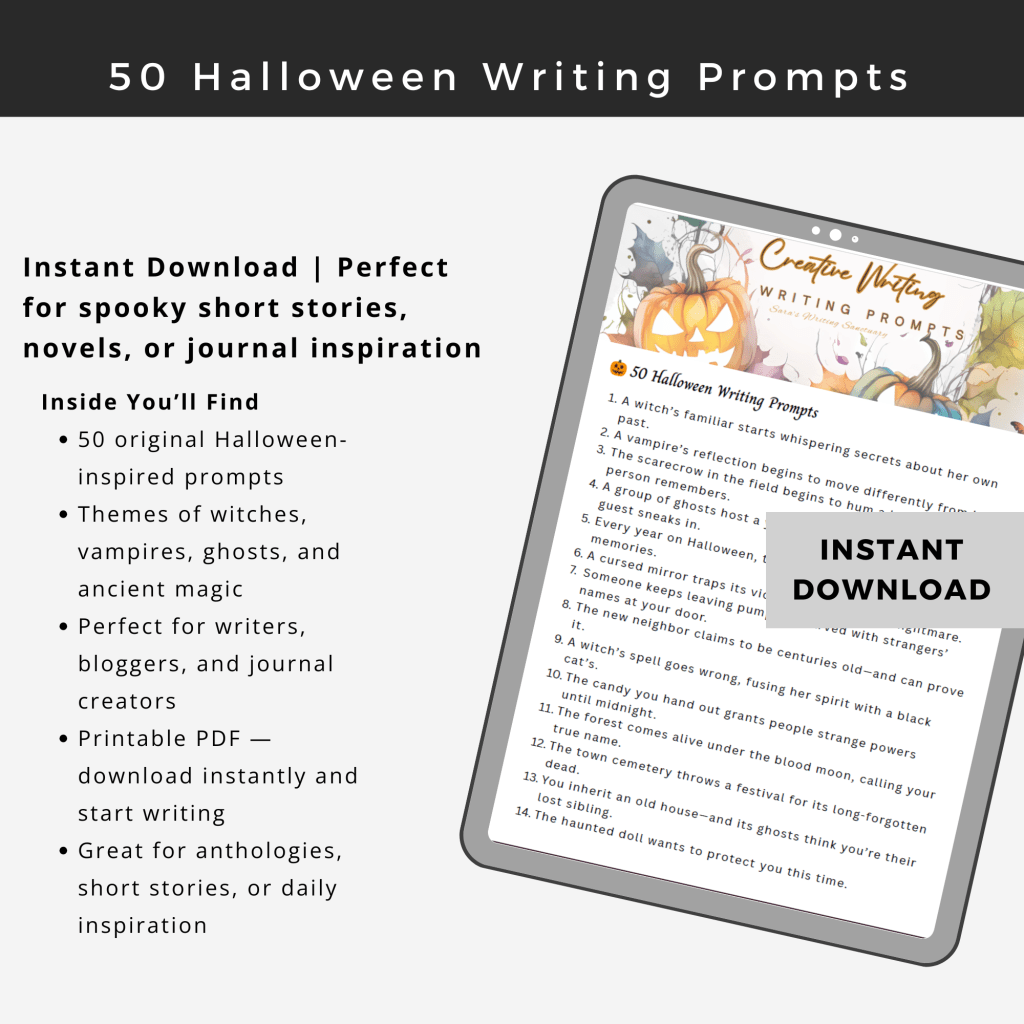
🎃 New Release: 50 Halloween Writing Prompts for Dark & Magical Tales

The veil is thin tonight… and inspiration is waiting to be summoned. ✨

I’m so excited to share something special for this Halloween season — my newest prompt collection: 50 Halloween Writing Prompts, now available on Payhip.

These prompts are crafted for writers who love a touch of darkness, a hint of romance, and the whisper of something otherworldly in their stories. Whether you’re writing about cursed lovers, haunted towns, or ancient powers that wake under the blood moon — these ideas are here to spark your imagination.


🕯️ What You’ll Find Inside

  • 50 original Halloween-themed prompts
  • A printable, beautifully formatted PDF
  • Perfect for fantasy, paranormal, gothic, or cozy-spooky writers
  • Great for journaling, flash fiction, or story warm-ups

Each prompt invites you to explore the eerie beauty of October — from haunted mirrors and forgotten witches to ghosts seeking love or redemption.


🖋️ A Little Sneak Peek:

“A vampire’s reflection begins to move differently from him.”
“Every year on Halloween, the dead come to trade memories.”
“A witch’s spell goes wrong, fusing her spirit with a black cat’s.”


🧙‍♀️ Grab Your Copy

✨ Download your copy now on Payhip
and let your next story rise with the moon. 🌕

If you share your stories or writing inspired by these prompts, tag me on Instagram — I’d love to see what you create!


🍂 Closing Thought

Halloween may only last one night, but its magic lingers in every story we tell.
Let’s keep the shadows alive — one prompt at a time.

Happy Halloween and Happy writing ^_^
Sara 🕯️

2025 Months, October 2025

🎃 Halloween Writing Spectacular: 31 Prompts & Spooky Challenges

October 31 — When the veil thins, stories stir.

🎃 HAPPY HALLOWEEN!!!🎃

Halloween isn’t just for costumes and candy—it’s a night when imagination runs wild. Whether you’re brewing stories by candlelight or scribbling between trick-or-treaters, today is your invitation to let the eerie, the emotional, and the unexpected guide your pen.

So light your favorite candle, open your notebook, and choose a prompt or challenge below.


🕯️ 13 Spooky Writing Prompts

  1. A witch binds her power into a jack-o’-lantern—but someone steals it.
  2. Two lovers meet every Halloween night, never remembering each other come dawn.
  3. A cursed mirror shows reflections that predict the next full moon’s tragedy.
  4. The scarecrow in the field whispers your name. Tonight, you finally answer.
  5. A vampire hosts a costume party to hide in plain sight—but someone recognizes him.
  6. The pumpkin patch blooms with human-sized vines overnight.
  7. A spirit asks you to finish the story they never got to write.
  8. The black cat that always follows you finally speaks.
  9. A forgotten god returns when the last candle in town burns out.
  10. The ghost haunting your home leaves you a draft of their novel.
  11. A trick-or-treat bag becomes heavier with something that isn’t candy.
  12. Every mask at the party reveals the wearer’s true nature—except yours.
  13. The cemetery gates open at midnight, and you’re on the guest list.

🩸 9 Dark-Romance & Fantasy Twists

  1. A reaper falls for the witch he’s meant to collect.
  2. A werewolf’s mate is cursed to forget him each Halloween.
  3. The vampire king returns to claim his lost bride—reborn as a demon hunter.
  4. A necromancer raises their soulmate by mistake.
  5. A fae bargains a mortal’s soul for one night of love.
  6. The ghost of your rival offers you power—if you’ll share your heart.
  7. Two enemies trapped in a haunted mansion discover their shared curse.
  8. A blood ritual meant to summon a demon summons your past lover instead.
  9. The moon itself confesses it’s been watching you for centuries.

🔮 9 Mini Challenges for Halloween Night

  1. Flash Fright: Write a 100-word horror story in 10 minutes.
  2. Trick or Treat POV: Tell a scene from the monster’s perspective.
  3. Haunted Dialogue: Create a conversation between the living and the dead.
  4. Shadow Sketch: Describe a place using only senses other than sight.
  5. Pumpkin Prompt: Pick any object nearby—make it cursed.
  6. The Last Page: Write the final paragraph of a horror novel you haven’t written yet.
  7. Sweet & Sinister: Mix romance and fear in one short scene.
  8. Spellbook Swap: Invent a spell that goes wrong in a hilarious or tragic way.
  9. Midnight Muse: Write under candlelight or by a single lamp—see how it changes your tone.

🕸️ Closing Thoughts

Halloween reminds us why we write—to feel, to transform, to face the dark and find beauty within it. Whether your words tonight are eerie, funny, or tender, let them dance like ghosts across the page.

Happy Writing ^_^

🎃 HAPPY HALLOWEEN!!!🎃

2025 Months, October 2025

The Art of Doing Less: Finding Joy in Slower Creative Seasons

In a world that glorifies hustle, it can feel strange—even wrong—to slow down. As writers and creatives, we often equate productivity with purpose. When words don’t flow or projects stall, it’s easy to fall into guilt. But what if slower seasons aren’t failures at all? What if they’re essential chapters in the creative journey?

🌙 The Myth of Constant Creation

We’re taught that success comes from relentless output: daily word counts, weekly posts, constant engagement. Yet creativity doesn’t thrive under pressure—it blooms in balance. Every artist, like nature itself, moves in cycles. There’s a time for harvest and a time for hibernation. When we deny those slower phases, we risk burnout and lose connection to the joy that drew us to create in the first place.

🍃 Stillness as Fertile Ground

Doing less doesn’t mean doing nothing. It means creating space—for reflection, observation, and quiet growth. Sometimes inspiration needs silence to surface. A walk in the woods, a cozy night reading, or simply journaling without goals can nurture ideas that later bloom into full projects. Slower seasons are when our minds compost what we’ve gathered, transforming fragments into fresh creative soil.

☕ Redefining “Productive”

What if rest was part of your process, not a reward for finishing? Writing one paragraph with intention can be just as meaningful as drafting ten pages in a rush. When you slow down, you reconnect with your voice, your rhythm, and your purpose. Productivity isn’t about speed—it’s about resonance. What you create slowly often carries more heart.

🌸 Finding Joy in the Pause

To find joy in slower creative seasons, practice gratitude for small things: a line that resonates, an image that lingers, a single moment of connection. Let go of comparison. Every writer’s rhythm is different, and that’s what makes your work uniquely yours. Joy grows when you allow yourself to be present rather than perfect.

✨ Gentle Practices for the Slow Season

  • Create without expectation. Sketch, free-write, or daydream just for you.
  • Revisit old work. See how far you’ve come and let it remind you that growth isn’t always visible.
  • Nourish your senses. Light a candle, sip tea, and write what you feel instead of what you think you should produce.
  • Reflect, don’t rush. Ask yourself: what do I need more of right now—movement or stillness?

Happy Writing ^_^

2025 Months, October 2025

🌙 Balancing Productivity With Rest as a Chronic Illness Writer

Living with chronic illness while pursuing a writing career can feel like walking a tightrope. Some days, creativity flows effortlessly — words pour from your fingertips. Other days, even sitting upright feels impossible. Balancing productivity with rest isn’t just a challenge; it’s a skill you cultivate through compassion, self-awareness, and patience.

💫 Redefining What “Productive” Means

Traditional productivity often glorifies hustle — long hours, constant output, and pushing through pain. But for chronic illness writers, that mindset can lead straight to burnout. Productivity doesn’t have to mean constant motion.

It can mean:

  • Writing a paragraph on a flare-up day.
  • Revising a single scene or jotting down a new idea.
  • Resting intentionally so your creativity can recover.

Every act of care, reflection, and small progress is productive. The goal is consistency in compassion, not perfection in output.

🌿 Listening to Your Body’s Rhythms

Your body already has its own creative rhythm — energy waves, flare cycles, and emotional tides. Start tracking when you feel most alert or inspired. For some, that’s early morning quiet; for others, late-night stillness.

Gentle tip:

Keep a “Body-Energy Log” for two weeks. Note how pain, fatigue, or digestion affect your focus. Once you notice patterns, you can schedule writing during your “spark hours” and rest during your “healing hours.”

🕯️ Creating Flexible Writing Rituals

Rigid schedules don’t work when symptoms are unpredictable. Instead, create rituals that support your creative mindset even when you can’t write much.

Try these ideas:

  • A five-minute journaling session before bed.
  • Listening to an inspiring playlist while resting.
  • Dictating story ideas on a voice recorder during low-energy moments.

Rituals remind you that creativity is a living thing — it adapts with you.

🌧️ Giving Yourself Permission to Pause

Rest is not laziness; it’s part of the process. When your body demands stillness, listen. Your ideas are still simmering beneath the surface, waiting to bloom when you have strength again.

If guilt creeps in, try reframing:

“Resting today gives tomorrow’s words more life.”

That gentle truth can transform your mindset from frustration to trust.

🌙 Building a Sustainable Creative Routine

To thrive long-term, balance comes from structure that supports flexibility.
Here’s a framework many chronic illness writers find helpful:

Focus AreaGentle Practice
PlanningUse weekly instead of daily goals to allow room for rest.
Energy ManagementAlternate creative days with rest or admin tasks.
MindsetCelebrate progress weekly, no matter how small.
BoundariesCommunicate clearly with collaborators or clients about your pace.

When your routine honors your body’s needs, your creativity becomes more sustainable — and more authentic.

🌸 A Closing Note of Compassion

As writers with chronic illnesses, our creativity is intertwined with healing. Some of our best work is born from stillness, reflection, and self-care. You are not behind; you’re simply writing in rhythm with your own unique body and soul.

Your story — both on the page and in life — matters exactly as it is.

Happy Writing ^_^

2025 Months, October 2025

Creating Mythic Beasts Rooted in Seasonal Folklore


The Power of the Seasons in Mythmaking

From the frost giants of winter to the firebirds of midsummer, every season carries its own mythic pulse. In folklore, the changing of the seasons wasn’t just a calendar shift—it was a transformation of the world itself. Spirits, creatures, and gods reflected these cycles, embodying the fears and hopes of the people who told their stories.

When you root your mythic beasts in seasonal folklore, you give them purpose beyond being “cool monsters.” They become symbolic—guardians, omens, or reflections of human emotion through the rhythm of nature.


🌸 Spring: Beasts of Rebirth and Awakening

Spring creatures embody renewal, fertility, and the fragile balance between life and death. Think of serpents shedding their skins, fae tricksters returning with the thaw, or deer spirits guiding lost travelers out of the winter woods.

Ideas for Spring Beasts:

  • Bloom Serpent – A snake that slithers through gardens at dawn, leaving trails of new flowers. Its venom can either kill or resurrect depending on intent.
  • Wisp Shepherds – ethereal fae who collect the souls that froze in winter and lead them toward new life.
  • The Glass Hare – born from ice that refuses to melt, it runs through morning mist, symbolizing fleeting hope.

Spring myths often teach about beginnings—but also the fragility of them.


☀️ Summer: Creatures of Fire and Frenzy

Summer beasts embody heat, desire, celebration, and sometimes destruction. Folklore often turns toward the wild: the passion of life, the danger of abundance, and the storms that cleanse the earth.

Ideas for Summer Beasts:

  • Sunforged Lions – glowing beasts whose roars summon droughts or burn away disease.
  • Ashwing Moths – drawn to festival fires, believed to be souls of those who died during the harvest.
  • The Ember Wolf – hunts under red moons and guards ancient bonfires that never die out.

Summer monsters often blur the line between blessing and curse—they give as fiercely as they take.


🍂 Autumn: Spirits of Decay and Transition

Autumn is the season of thresholds. Folklore from this time brims with creatures of harvest and haunting—beings that carry messages between life and death, reminding mortals of the impermanence of all things.

Ideas for Autumn Beasts:

  • The Scythe Crow – a skeletal bird that harvests lost memories, scattering them like seeds for others to find.
  • Mire Stags – antlered ghosts that emerge from fog, leading travelers toward revelations—or ruin.
  • Harvest Wraiths – spirits of fields left unharvested, cursed to wander until offered a final sheaf of grain.

Autumn creatures thrive on symbolism: endings, gratitude, memory, and the slow surrender to darkness.


❄️ Winter: Monsters of Silence and Survival

Winter folklore brings out the harshest and most haunting of mythic beasts—those born of hunger, endurance, and the long night. These are the guardians of stillness and the devourers of weakness.

Ideas for Winter Beasts:

  • Hollow Wolves – spirits that howl to fill the silence left by lost souls.
  • Snowbound Witches – half-human spirits of the storm, whispering promises to those who stray too far from their fires.
  • The Ice Heart Stag – whose frozen core can heal frostbite or shatter entire kingdoms.

Winter’s creatures are teachers of endurance—they remind us that every death is also a preparation for rebirth.


Crafting Your Own Seasonal Myth

When designing your mythic beast, ask yourself:

  1. What emotion does the season evoke?
    (Hope, longing, decay, stillness, joy, hunger?)
  2. What natural event symbolizes this feeling?
    (Melting snow, migrating birds, storms, falling leaves?)
  3. How does the creature embody or challenge that symbol?
    (Does it bring balance, chaos, or transformation?)

Give your creature a cultural or ritual context—a myth the people of your world might tell around fires or during solstice feasts. Let it evolve over generations, so it feels ancient even in a world you’ve just begun to build.


✨ Final Thought

Seasonal beasts aren’t just background lore—they’re storytellers. They echo the heartbeat of the world you’re creating, teaching its people how to live, love, and endure. When your readers meet them, they should feel the season shift—not just in the weather, but in the soul.

Happy Writing ^_^

2025 Months, October 2025

🌑 Using Shadows as Symbolism in Paranormal Worlds

In paranormal and dark fantasy writing, shadows are never just the absence of light—they are the echoes of what’s hidden, forgotten, or feared. Whether they slither across haunted corridors or curl around your protagonist’s soul, shadows can become one of your story’s most powerful symbols.

🕯️ The Dual Nature of Shadows

Shadows exist only because of light. This duality mirrors the constant tension in paranormal worlds—between life and death, mortal and immortal, good and evil.
They remind readers that darkness isn’t always villainous; sometimes it’s protective, mysterious, or misunderstood. A ghost might linger in the shadows not to harm, but because it fears being forgotten. A cursed creature might cloak itself in shadow to survive, not to destroy.

🌘 Shadows as Inner Conflict

In character-driven stories, shadows often symbolize the parts of ourselves we try to hide.
For a vampire struggling with morality, the shadow could represent the hunger they can’t suppress.
For a witch repressing her power, her shadow might whisper of what she could become if she stopped pretending to be harmless.

When you use shadows as internal symbolism, you invite readers to explore the psychological landscapes of your characters—their secrets, regrets, and desires.

Writing Tip: Try writing a scene where your character interacts directly with their shadow. What would it say? What truth would it reveal?

🌑 Shadows as Living Forces

In many paranormal worlds, shadows are more than symbols—they’re sentient. They can whisper, move, devour, or protect.
When you give shadows agency, they become manifestations of power—extensions of your world’s magic system or emotional resonance.

Consider:

  • A necromancer whose shadow stores the memories of the dead.
  • A werewolf whose shadow moves independently during the full moon.
  • A cursed castle where the shadows remember every murder that’s taken place within.

These examples transform the abstract into something visceral and alive, giving readers a sense that even the darkness has a pulse.

🌒 Worldbuilding with Shadows

In paranormal worlds, setting often mirrors emotion. The more intimately you weave shadow imagery into your environment, the more your readers feel the unseen tension.
Fog-thick forests, candlelit mansions, and twilight graveyards all hold more power when shadows behave with intention—stretching, curling, or swallowing sound itself.

Ask yourself: Do your world’s shadows obey physics, or emotion?

Shadows can reveal where reality bends—where the veil between worlds thins. Maybe they grow longer near ancient ruins or disappear entirely in cursed lands.

🖤 Shadow as Transformation

Finally, shadows symbolize becoming. When a character steps into darkness and emerges changed, it mirrors the mythic journey through the underworld—the confrontation of fear that leads to rebirth.

In paranormal storytelling, this transformation might be literal:

  • A human bitten by a creature of the night.
  • A ghost finding peace and fading into the dawn.
  • A witch embracing forbidden magic and finding her true power.

Shadows are thresholds. They invite both your characters and readers to step beyond the known and face what waits in the dark.


✍️ Final Thoughts

Shadows don’t only hide monsters—they reveal truth.
In the paranormal world, light defines the setting, but shadows define the soul.
Next time you write, don’t fear the dark. Let it speak, move, and breathe life into the spaces your characters dare not enter.

Happy Writing ^_^