
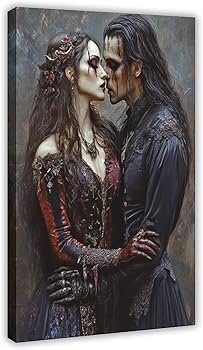
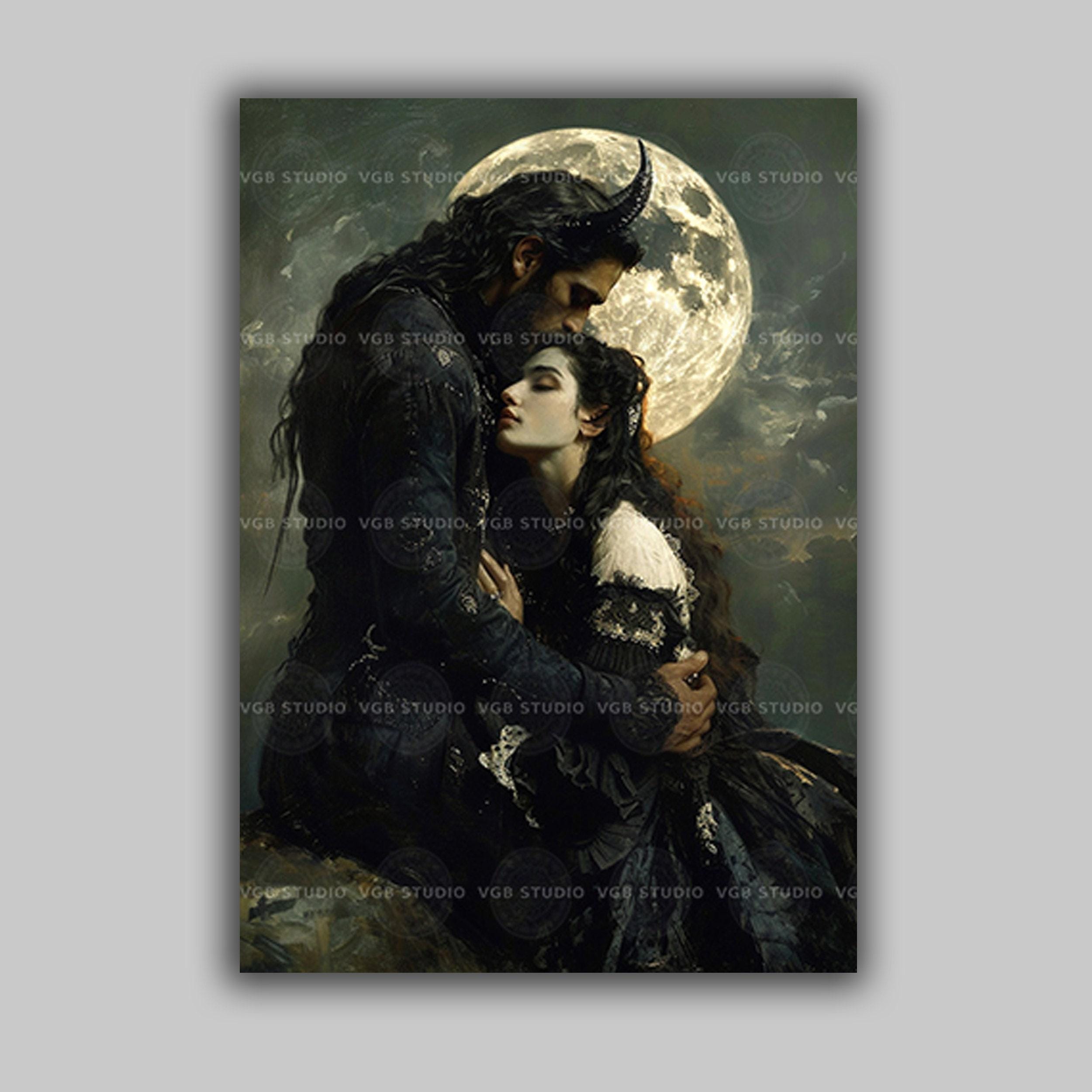
There is something deeply compelling about love that shouldn’t exist.
Monstrous love—whether between vampire and human, demon and saint, cursed wolf and fragile mortal—has always carried a magnetic pull. It unsettles us. It challenges us. And yet, it often feels more honest than the neat, polished romances we’re taught to admire.
Why?
Because monstrous love strips away illusion.
Monstrous Love Is Love Without Pretense
In many dark fantasy and paranormal romances, the “monster” is not simply a creature with fangs or claws. The monster represents hunger. Trauma. Isolation. Rage. Immortality. The parts of ourselves we were told to hide.
Think about stories like Dracula by Bram Stoker or Frankenstein by Mary Shelley. Beneath the horror lies a deeper question: What does it mean to be loved when you are seen as unnatural?
Modern paranormal romance leans into this tension even further. In Twilight by Stephenie Meyer, Edward’s monstrosity is tied directly to self-restraint and devotion. In A Court of Thorns and Roses by Sarah J. Maas, power, darkness, and trauma become the very soil where intimacy grows.
Monstrous love asks:
- Will you stay when you see my teeth?
- Will you hold me when I am dangerous?
- Will you choose me when the world says I am wrong?
That vulnerability is raw. And it is beautiful.
The Monster as Metaphor
As writers and readers of fantasy—especially dark fantasy—we know that monsters are rarely just monsters.
They are metaphors for:
- Otherness
- Mental illness
- Sexuality
- Power imbalances
- Trauma
- Forbidden desire
When two beings from opposing worlds fall in love—hunter and hunted, angel and demon, rival alphas, fae king and mortal girl—it mirrors the internal wars we fight within ourselves.
Monstrous love says: You are not unworthy because you are different.
For many readers, especially those who have felt misunderstood or “too much,” these stories feel like coming home.
Power, Consent, and Choice
At its best, monstrous love is not about domination. It’s about choice.
A vampire choosing not to feed.
A demon choosing devotion over destruction.
A cursed wolf choosing to kneel instead of kill.
That choice transforms the monster.
The beauty lies in the restraint.
In stories where one lover could destroy the other but doesn’t, we see the ultimate act of intimacy: power placed gently in someone else’s hands.
And that is profoundly romantic.
Love That Survives the Dark
Traditional love stories often bloom in safety.
Monstrous love blooms in shadow.
It survives curses. Bloodlines. Ancient wars. Hunger. Immortality. Prejudice. Sometimes even death.
There is something eternal about a love that has to fight to exist.
That is why so many dark fantasy romances feel mythic. They tap into ancient storytelling traditions where gods loved mortals, beasts married maidens, and monsters were simply beings waiting to be understood.
Why We’re Drawn to It
If you are a reader—or writer—of dark fantasy or paranormal romance, you may already know the answer.
Monstrous love allows us to explore:
- Desire without shame
- Anger without rejection
- Trauma without abandonment
- Power without cruelty
It gives us permission to believe that even our sharpest edges are worthy of devotion.
For writers (especially those of us who love mythic, gothic atmospheres and emotionally intense bonds), monstrous love offers endless layers. It allows romance to intertwine with transformation. It lets love become the catalyst for identity.
Not love that fixes.
Love that witnesses.
The True Beauty
The true beauty of monstrous love is this:
It does not demand that the monster become less.
It invites them to become seen.
And when someone chooses you not despite your darkness—but with full awareness of it—that is a love that feels eternal.
Maybe that is why these stories endure.
Because deep down, we all want someone to look at our shadows and say:
“I am not afraid of you.”
Happy Writing ^_^

 Sara's Writing Sanctuary