
2025 Months, December 2025

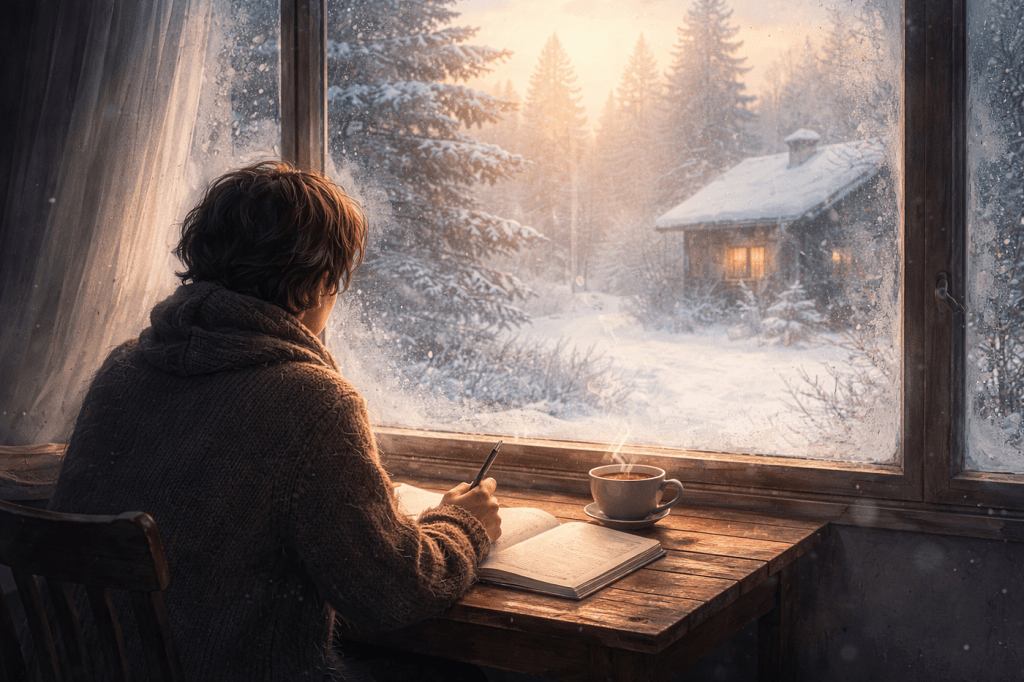
Winter as a Mirror: What This Season Reveals About Your Story’s Heart

Winter strips the world down to its bones.

The leaves fall. The noise quiets. Growth slows—not because life has ended, but because it has turned inward. For writers, winter offers something rare and powerful: a mirror. One that reflects not just what we’re writing, but why we’re writing it.

If you listen closely, winter can reveal the true heart of your story.

Winter Shows Us What Remains When Everything Else Is Gone

In fiction, winter is rarely just a setting. It’s a state of being.

When characters are forced into stillness—by snowstorms, isolation, grief, or exhaustion—what remains becomes undeniable. Stripped of distractions, they confront truths they can no longer avoid.

Ask yourself:

  • What does your character cling to when comfort is gone?
  • What belief, wound, or desire refuses to freeze over?
  • What part of them survives the cold?

That answer is often your story’s emotional core.

The Quiet Season Reveals the Unspoken

Winter isn’t loud. It doesn’t demand growth the way spring does or burn with the urgency of summer. Instead, it invites silence.

This is where subtext thrives.

In winter stories—or winter phases of stories—characters often say less but feel more. Their internal landscape becomes the true terrain.

If your draft feels stalled right now, it may not be broken. It may be waiting for you to listen to what hasn’t been said yet.

Try asking:

  • What truth is my character avoiding?
  • What memory resurfaces in stillness?
  • What fear grows louder when everything else quiets?

Winter Exposes What Needs Healing

Winter is not just about endurance. It’s about recovery.

In nature, winter is when roots deepen underground. In stories, this is when wounds are acknowledged—even if they aren’t healed yet.

Your story’s winter may reveal:

  • A betrayal that hasn’t been forgiven
  • A loss that still aches
  • A truth that reshapes identity

These moments matter. They are the groundwork for transformation later—even if the change hasn’t arrived yet.

Your Creative Winter Is Part of the Story

If you are feeling slow, introspective, or disconnected from momentum right now, that doesn’t mean you’re failing as a writer. It means you’re in a season of reflection.

Your story might be asking:

  • What truly matters in this narrative?
  • Which threads are essential—and which can be released?
  • What emotional truth are you circling but not yet naming?

Winter doesn’t rush answers. It makes space for them.

Writing With Winter Instead of Against It

Instead of forcing productivity, try aligning with the season:

  • Revisit character backstories
  • Journal from your protagonist’s POV
  • Rewrite a scene focusing only on emotion, not plot
  • Let yourself write slowly, quietly, imperfectly

Some of the most powerful stories are born not in bursts of inspiration—but in stillness.

Before the Thaw

Spring will come. It always does.

But the strength of what blooms later depends on what was faced—and tended to—during winter.

So if your story feels quiet right now, don’t be afraid. Look into the mirror winter offers. The heart of your story is already there, waiting to be seen.

Gentle Reflection Prompt for Writers

What truth does your character discover in stillness—one they couldn’t hear during louder seasons?

Happy Writing ^_^

2025 Months, November 2025

❄️ The Archetype of the Winter Witch / Winter Guardian

A Creative Exploration for Writers, Worldbuilders, and Myth-Makers

Winter has always carried a dual nature—both stark and sacred. It is a season of stillness and survival, a landscape where breath becomes visible and every sound feels sharper in the cold. It’s no wonder that writers across centuries have turned to winter figures—the Winter Witch, the Frost Guardian, the Snow Priestess, the Keeper of the Cold—to represent inner and outer worlds shaped by silence, endurance, and transformation.

Today, we step into this archetype and explore how you can bring your own Winter Witch or Winter Guardian to life in your fiction, poetry, or personal mythology.

🌙 What Is the Winter Witch / Winter Guardian Archetype?

This archetype embodies solitude, protection, clarity, and necessary transformation. Unlike the stereotyped “ice queen,” the Winter Witch isn’t heartless. She is selectively warm, offering her fire only to those who respect the cold’s lessons.

A Winter Guardian may be:

  • A mystical figure who protects a frozen realm
  • A witch whose magic thrives in snow, starlight, and silence
  • A guide who teaches characters what must be released before new beginnings
  • A keeper of old knowledge preserved in frost, bone, and memory
  • A spirit who ushers in stillness so time can heal, transform, or realign

This archetype is powerful because winter is both harsh and regenerative. It kills what cannot endure but shelters what is meant to bloom again.

❄️ Traits of the Winter Witch / Winter Guardian

Your winter archetype might hold:

1. Stillness & Clarity

Winter strips the world down to what truly matters.

Your Winter Witch may see truths others overlook.

Your Winter Guardian may perceive hidden intentions.

2. Threshold Magic

Winter is a doorway between seasons, old and new, death and rebirth.

They may be entrusted with boundaries—forest borders, ancient seals, the veil between worlds.

3. Protective Instincts

Not aggressive, but unyielding.

Their protection might feel cold because it is honest, direct, and necessary.

4. Harsh Mercy

Winter teaches through difficulty.

This archetype may push characters to face:

  • their buried wounds
  • their unspoken fears
  • their deepest, most honest truths

5. Ancestral Memory

Winter preserves what time tries to erase.

This archetype may remember histories others have forgotten—or want to forget.

🕯️ Symbolism Connected to This Archetype

Use these to deepen your character, scenes, or magic system:

Natural Symbols

  • Snowflakes (uniqueness, fragility hiding strength)
  • Ice (preservation, truth made visible)
  • Evergreen trees (endurance, quiet life in the dark)
  • Winter animals (wolves, owls, white stags, foxes)

Spiritual & Emotional Symbols

  • Withdrawal for healing
  • The moment before change
  • Frozen emotions that must thaw
  • Silence as a teacher
  • Protecting the spark of hope in darkness

Materials & Magical Tools

  • Frost crystals
  • Silver bells
  • Moonlit snow water
  • Obsidian and smoky quartz
  • Cloaks woven from starlight or the aurora

🔥 The Winter Witch as a Character Archetype

The Secluded Healer

A witch who brews warmth into the cold, guiding characters toward healing through quiet ritual.

The Guardian of an Ancient Winter Realm

Sworn to protect portals, ley lines, mountain passes, or frozen ruins.

The Last of Her Lineage

Carrying a bloodline tied to winter magic—rare, powerful, and feared.

The Reluctant Protector

Not chosen, but called. She stands against darkness because no one else can.

The Witch Who Judges by Deeds, Not Words

Insightful, calm, and deeply intuitive—a mirror that forces others to see themselves clearly.

❄️ The Winter Guardian as a Mythic Role

This figure isn’t always human.

They may be:

  • A spirit bound to a northern wind
  • A wolf made of pale flame
  • A fallen star that took human form
  • An immortal bound to a snow-covered temple
  • A deity’s emissary who oversees the cyclical death of the season

Guardians represent duty, balance, and cosmic timing.

They are the hinge upon which the winter world turns.

📚 Writing Prompts: Create Your Own Winter Witch / Winter Guardian

Here are 10 prompts you can use in your story, journal, or worldbuilding notes:

  1. A Winter Witch whose magic can sense lies in the air temperature meets someone whose presence refuses to warm or cool.
  2. A Winter Guardian protects a sacred glacier that holds the memories of a dying world.
  3. Snow stops falling in your world. The Winter Witch awakens after centuries—angry.
  4. A young witch is told she must survive one winter alone in the frozen woods to awaken her ancestral power.
  5. A Winter Guardian whose heart has literally turned to ice begins to thaw after encountering a stranger with forgotten magic.
  6. A condemned criminal is offered redemption by serving a lone winter sentinel for a year.
  7. A Winter Witch keeps a lantern that can guide lost souls home—but it only works on the longest night of the year.
  8. A Winter Guardian is the only one who knows why an eternal winter was created.
  9. A prophecy says the Winter Witch must choose who survives the coming blizzard—an impossible choice.
  10. A Winter Guardian is dying, and the world must choose their replacement… but winter magic chooses someone unexpected.

🌨️ How Writers Can Use This Archetype

For Fiction Writers:

Build atmosphere, create powerful character arcs, invent myth systems tied to frost or winter stars.

For Poets:

Explore themes of silence, endurance, cold truth, and the intimacy of winter nights.

For Memoir or Personal Journaling:

Use the archetype to understand the “winter seasons” of your life—times of rest, reflection, or rebuilding.

For Worldbuilders:

Tie winter magic to:

  • elements (ice, air, moonlight)
  • deity cycles
  • ancestral rites
  • hidden winter kingdoms

This archetype is incredibly versatile—and emotionally rich.

🌙 Final Thoughts

The Winter Witch and the Winter Guardian aren’t merely characters; they’re reflections of the season’s deep truth:

Winter is not a dead season. It is a sacred pause.

It is the breath before creation, the silence that helps us hear ourselves, the moment where hidden seeds wait for spring.

When you write your winter figure—whether gentle, fierce, aloof, or protective—remember that they carry the transformative magic of the cold:

honesty, endurance, preservation, and quiet power.

Happy Writing ^_^

2025 Months, November 2025, Self Care

The Writer’s Self-Care Toolkit for Winter

How to protect your creativity, energy, and imagination during the colder months

Winter asks writers to slow down, breathe deeper, and listen to the quiet spaces inside ourselves. The days grow shorter, the light shifts, and our energy naturally changes. For many creatives, winter can be a season of rich imagination — but also of fatigue, emotional heaviness, or creative dormancy.

The truth is simple: writers need self-care just as much as we need inspiration. And winter is the perfect time to build a toolkit that supports both your body and your creative mind.

Below is a gentle, effective winter self-care toolkit designed specifically for writers — especially those balancing busy schedules, chronic illness, emotional exhaustion, or creative overwhelm.

❄️ 

1. Create a Warm Writing Ritual

Winter writing thrives on ritual. You don’t have to write more — you have to write more intentionally.

Try:

  • A warm drink beside you (herbal tea, ginger tea, broth, or hot chocolate)
  • A soft blanket or fuzzy socks
  • A comforting candle or essential oil (vanilla, cedar, ginger, or cinnamon)
  • One grounding breath before you begin writing

The goal is to make your writing space a safe, warm cocoon where words feel easier.

🕯️ 

2. Use the Early Darkness to Your Advantage

Winter evenings can feel limiting, but for writers they are magic.

The early night:

  • Sharpens atmosphere-driven writing
  • Helps you connect with introspective or moody scenes
  • Makes worldbuilding feel deeper and more immersive
  • Encourages slower, richer storytelling

If mornings feel sluggish, give yourself permission to write after sunset when your creative brain naturally wakes up.

🌙 

3. Honor Your Energy Cycles

Winter energy isn’t linear — some days you’ll feel focused, other days like you’re pushing through fog.

Try following:

  • High-energy days: Draft new scenes, brainstorm, freewrite.
  • Medium-energy days: Edit, organize chapters, outline.
  • Low-energy days: Read, journal, listen to an audiobook, refill your creative well.

This cycle-based writing respects your body and prevents burnout.

🫖 

4. Nourish Your Body (Especially Your Brain)

Creative flow depends on physical comfort — and winter can trigger inflammation, low mood, and increased fatigue.

Simple winter-friendly nourishment:

  • Light broths and soups that keep the stomach calm
  • Warm, easy-to-digest meals (congee, lentil stews, veggie purees)
  • Hydration with warm liquids
  • Protein-rich snacks that don’t cause crashes
  • Stretching + gentle movement to release stiffness

Caring for your body is also caring for your stories.

📚 

5. Prioritize Emotional Rest

Winter encourages reflection — but it can also stir old emotions, loneliness, or self-criticism.

Some restorative winter practices:

  • A nightly or weekly journal for emotional release
  • Gratitude lists
  • Mood tracking tied to creative productivity
  • A “no guilt writing” rule — write what you can, when you can

Your emotional health is part of your writing craft.

🔥 

6. Keep a Small Creative Fire Burning

Your creativity doesn’t need to blaze in December or January — it only needs to stay warm.

Keep your creative fire alive with:

  • 5-minute writing bursts
  • Daily story seeds or single-line ideas
  • Describing one detail from your fantasy world
  • Posting a small writing update
  • Reading a chapter in your genre

Winter creativity is slow, steady, and simmering — not explosive.

🎧 

7. Curate a Winter Soundtrack

Music shapes mood, and winter writing thrives on sound.

Try playlists like:

  • Soft piano or lo-fi for calm drafting
  • Dark ambient for fantasy and atmosphere
  • Cozy cottagecore for journaling
  • Nature sounds (rain, fire, wind)
  • Emotional instrumental soundtracks for character work

Let sound melt you into your writing space.

✨ 

8. Build a “Winter Writer’s Survival Kit”

This can be a physical or digital kit. Include items that comfort, inspire, or motivate you.

Ideas:

  • A favorite pen + notebook
  • Blue-light glasses
  • Hand warmers
  • Herbal tea bags
  • Affirmation cards
  • Writing prompts for low-energy days
  • A small goal list for the winter months

Keep your kit near your desk or bed for easy access.

🌘 

9. Practice Seasonal Journaling

Winter is deeply tied to introspection and inner worlds — perfect for journaling.

Try these seasonal prompts:

  • How does winter change the way I write?
  • What does rest look like for me right now?
  • Which scenes in my story feel “winter-like”?
  • What emotional themes want my attention this season?

Aligning with the season makes writing feel natural rather than forced.

🔮 

10. Give Yourself Permission to Hibernate

One of the greatest gifts winter gives writers is permission:

permission to rest, to reset, to dream, to slow down.

You do not need to write at full speed to be a real writer.

You only need to stay connected to your creative self.

Let your winter be:

  • Softer
  • Slower
  • More intuitive
  • More comforting

Your stories will grow from that gentleness.

❄️ Final Thoughts

Winter isn’t a season of creative failure — it’s a season of creative incubation.

Words root in the quiet. Ideas grow under the snow. Rest becomes the foundation for spring’s creativity.

Your winter self-care toolkit is not indulgence — it’s part of your writing practice.

Take care of your body. Nurture your creativity. Hold space for yourself.

Your stories will meet you there.

Happy Writing ^_^